



Motherland Museum
(3rd Eye Museum)
The Arch’Triangle’s Nigerian Leg
A Monument to Reawaken Africa’s Earliest Architecture and the History the World Chose to Forget
The Motherland Museum stands in Enugu to recognize the cultural and historical significance of the Igbo people and to place their story at the heart of Africa’s broader history. It exists to shift how museums are imagined as places that carry responsibility for how history is told.
The museum’s structure was designed to guide visitors through a clear, layered story. It begins with human origins, moves through early civilization, global expansion, the rise and fall of empires, and the violent disruptions of slavery, colonialism, and imperialism. It continues through the fight for independence and the ongoing effects of neocolonial systems.
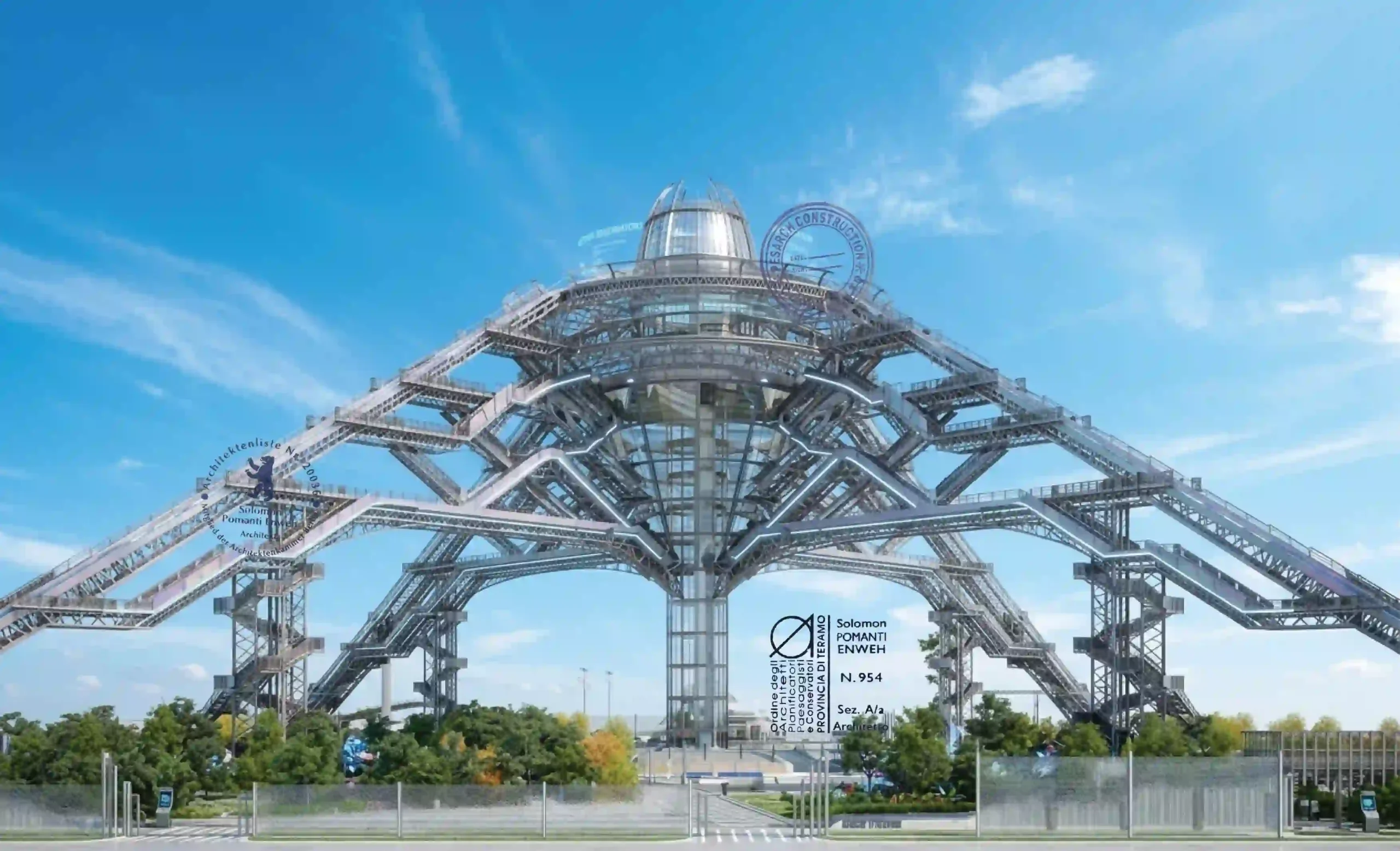
Architecturally, the building draws on both global and local references. At first glance, it may resemble the base of the Eiffel Tower, but that familiarity gives way to something deeper. Its shape revives the design of the ancient Nsude pyramids, which were built by the Igbo people and date back to the same era as Egypt’s earliest pyramids.
As part of The Arch’Triangle, the Motherland Museum gives the initiative a powerful starting point. It doesn’t aim to bring closure but to bring the narrative back to where it began.
A Monument to Reawaken Africa’s Earliest Architecture and the History the World Chose to Forget
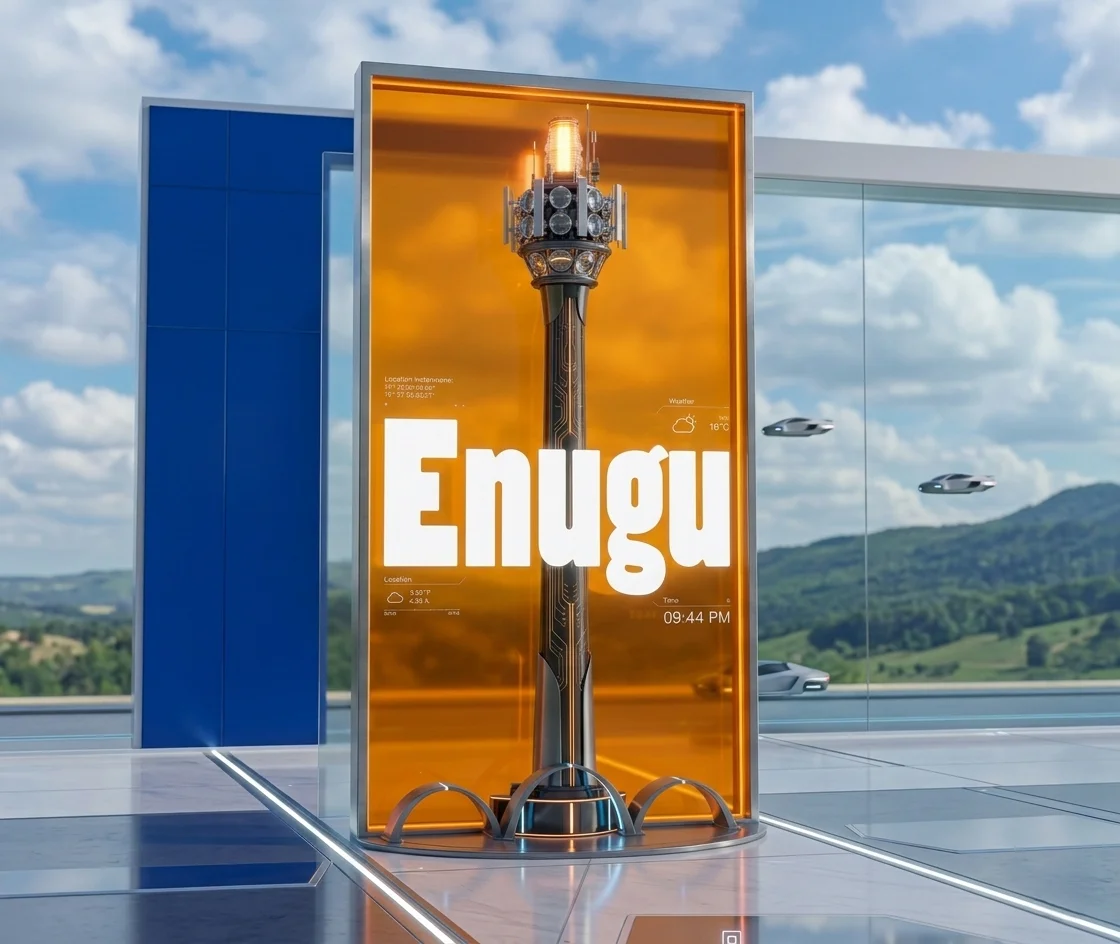
The Motherland Museum stands in Enugu to recognize the cultural and historical significance of the Igbo people and to place their story at the heart of Africa’s broader history. It exists to shift how museums are imagined as places that carry responsibility for how history is told.
The museum’s structure was designed to guide visitors through a clear, layered story. It begins with human origins, moves through early civilization, global expansion, the rise and fall of empires, and the violent disruptions of slavery, colonialism, and imperialism. It continues through the fight for independence and the ongoing effects of neocolonial systems.
Architecturally, the building draws on both global and local references. At first glance, it may resemble the base of the Eiffel Tower, but that familiarity gives way to something deeper. Its shape revives the design of the ancient Nsude pyramids, which were built by the Igbo people and date back to the same era as Egypt’s earliest pyramids.
As part of The Arch’Triangle, the Motherland Museum gives the initiative a powerful starting point. It doesn’t aim to bring closure but to bring the narrative back to where it began.
The Story is Built Into the Structure
At the Motherland Museum, form and meaning are inseparable. The building is designed to do what exhibitions alone cannot, carry visitors through the weight and complexity of shared human history. Rather than serving as a neutral container, the structure itself challenges, reveals, and connects by using space, symbolism, and elevation to shape how stories are seen and understood. The magnificence of this project positions it to achieve UNESCO World Heritage recognition for modern architecture upon completion.
Architecture as Narrative
The Motherland Museum turns architecture into the storyteller by inviting people to walk through time, from early human life to the rise of societies and from systems of oppression to cultural revival. Its very shape guides visitors through this journey, using architecture to surface difficult truths while honoring continuity and renewal.
Recognition Through Ascent
Along the paths and walls of the museum are sculptures of cultural and historical figures. Some are well known, while others less widely remembered. At the summit, surrounded by the Benin Wall-inspired ring and Queen Mother Corona, visitors gain both literal and emotional perspective.
Confronting Complexity
Through bold symbolism like the Eucharist-inspired Corona, the museum addresses slavery, colonialism, and the weight of missionary history. Rather than gloss over the past, the design invites reflection and reckoning. For young Nigerians in particular, the space offers a powerful reminder that their heritage is rich, complex, and still unfolding.
Combining Culture and Commerce
Positioned to anchor Enugu’s rise as a cultural and economic centre, the museum blends narrative architecture with tourism potential. Its setting, scale, and message mark it as both a local landmark and a global destination. It’s designed to host exhibitions, gatherings, and international visitors, bringing commerce, conversation, and visibility to the region. More than a place to look back, it’s a place that opens up what’s ahead.
A Space Made to Remember
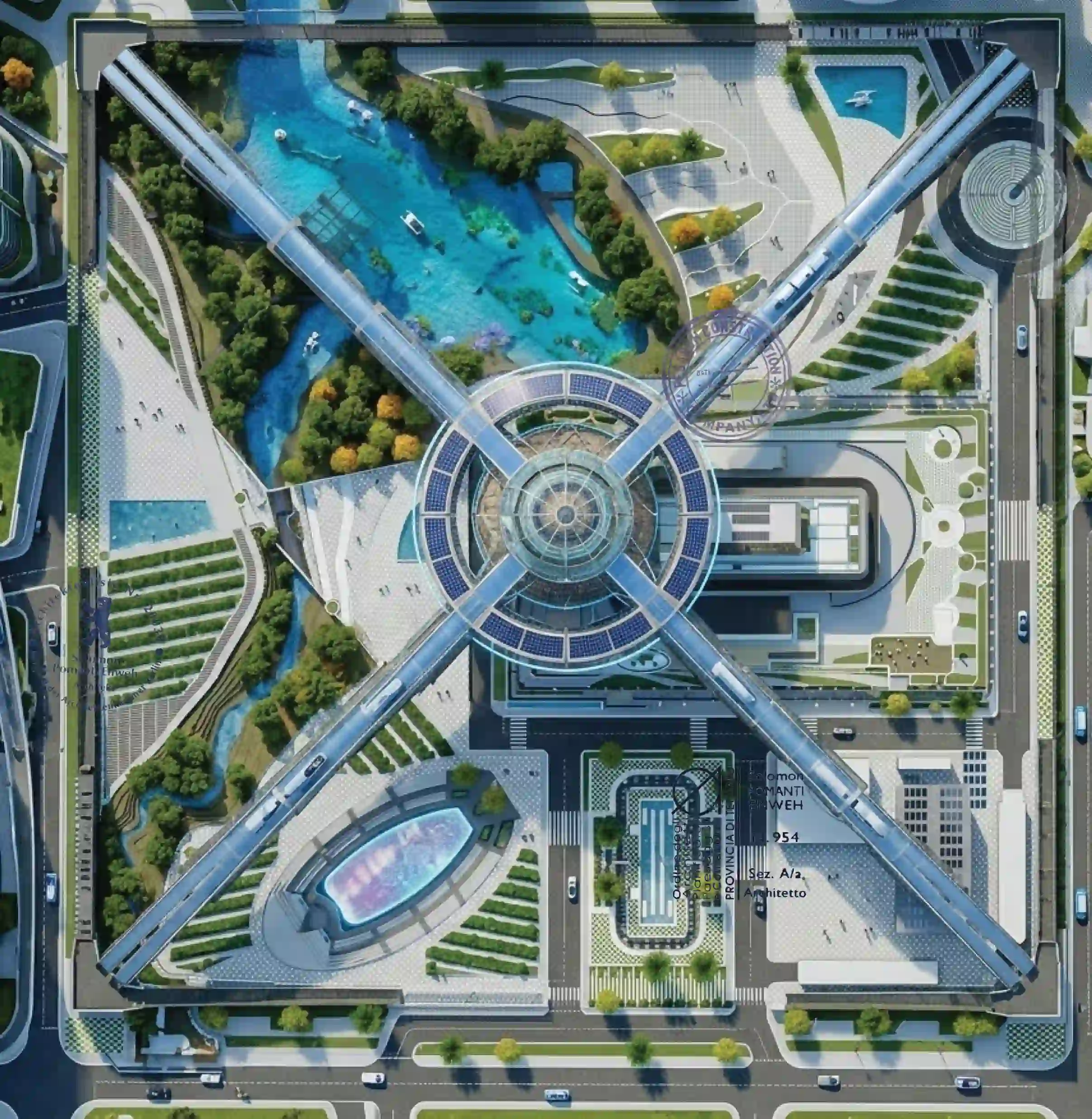
Set between Lake Nike, the Nike Resort, and the historic monument grounds, the Motherland Museum is the focal point of one of Nigeria’s most significant cultural sites. Visitors can arrive by road, by boat through Lake Nike, or on foot via walkways inspired by traditional ceremonial paths.The museum features three symbolic entrances
These access points frame the site as both a public landmark and a place of ritual return.
Form & Spirit
The building stands on a 100m x 100m base, the same footprint as the Eiffel Tower, but its form speaks entirely in African terms. At its crown sits the Queen Mother Corona, a transparent oval structure shaped like a ceremonial cup and Eucharistic host. It symbolises the intertwining legacies of faith, empire, and memory.
The design draws from:
- The Nsude pyramids
- The Benin Walls
- Igbo basketry (Nkata)
- Ancient Nsibidi script
A bronze-toned lattice wraps the building like woven cloth, catching light and shadow throughout the day.
Inside, four wings connect through spiral stairs, elevators, and walkways that carry visitors through a layered experience of history and culture.
Form & Spirit
The building stands on a 100m x 100m base, the same footprint as the Eiffel Tower, but its form speaks entirely in African terms. At its crown sits the Queen Mother Corona, a transparent oval structure shaped like a ceremonial cup and Eucharistic host. It symbolises the intertwining legacies of faith, empire, and memory.
The design draws from:
- The Nsude pyramids
- The Benin Walls
- Igbo basketry (Nkata)
- Ancient Nsibidi script
A bronze-toned lattice wraps the building like woven cloth, catching light and shadow throughout the day.
Inside, four wings connect through spiral stairs, elevators, and walkways that carry visitors through a layered experience of history and culture.
The Sacred Loop
At each of the four cardinal points, a staircase leads up to an 80-meter-high panoramic walkway. This elevated ring honors the erased Benin Walls and offers views of the lake, gardens, and sculpture path.
Below, ground-level paths and bridges mirror this circular journey, connecting courtyards, gardens, and reflective spaces. Movement through the site is intentionally looped, echoing African cosmologies of time and return.
The Sacred Loop
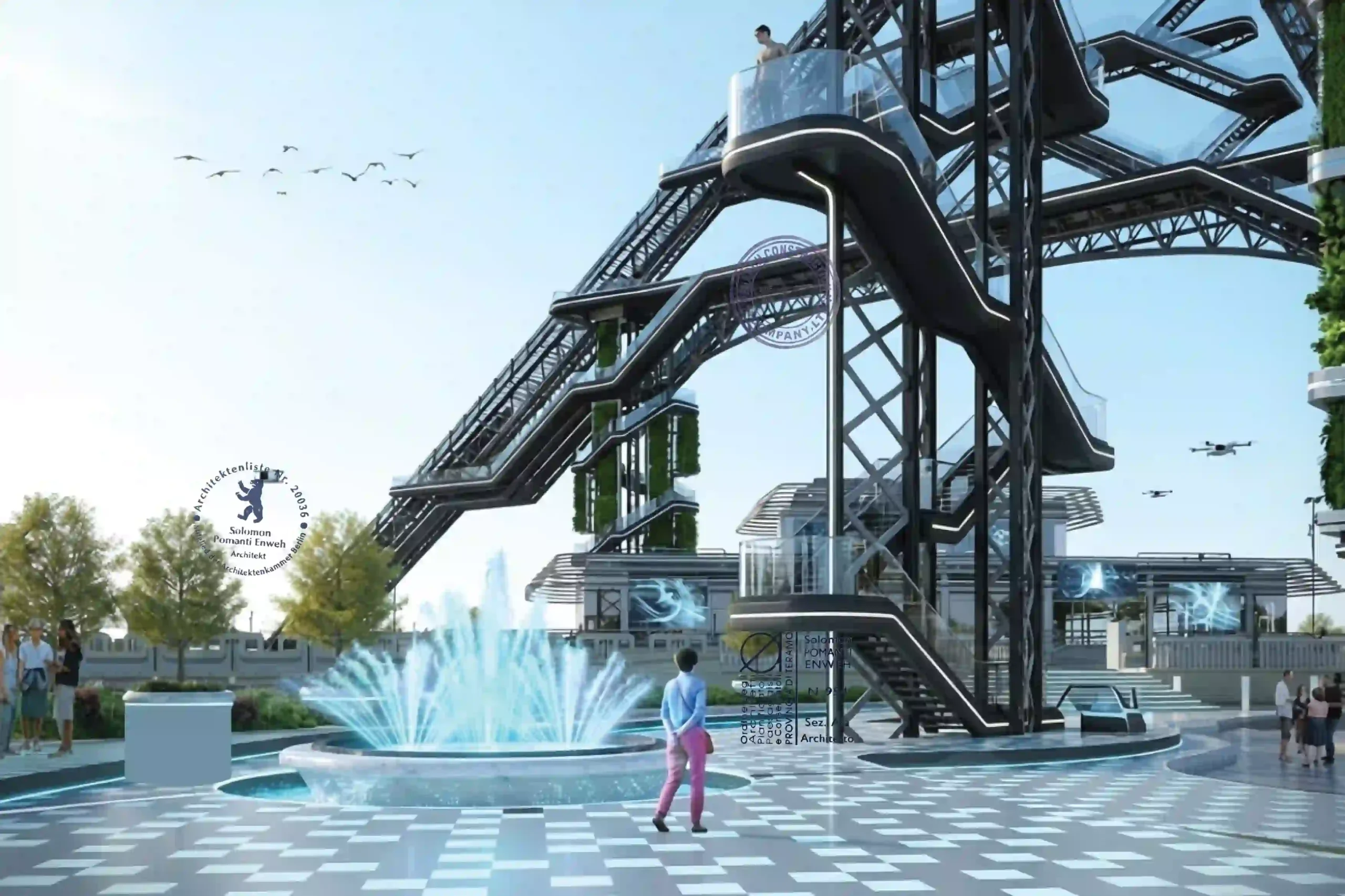
At each of the four cardinal points, a staircase leads up to an 80-meter-high panoramic walkway. This elevated ring honors the erased Benin Walls and offers views of the lake, gardens, and sculpture path.
Below, ground-level paths and bridges mirror this circular journey, connecting courtyards, gardens, and reflective spaces. Movement through the site is intentionally looped, echoing African cosmologies of time and return.
Inside the Living Monument
The museum’s interior is shaped by openness and light. Double central elevators and a dramatic spiral staircase carry visitors through a vertical journey across time.
Below ground, the Oculus memorial gallery immerses visitors in a solemn space of reflection, its atmosphere shaped by water-filtered light, concrete textures, and historical weight.
The ascent through column-free galleries, lined with materials like timber and precast concrete, culminates in the Queen Mother Corona, a luminous oval observatory symbolizing the Eucharist. This final space offers visitors a moment of quiet reckoning and expansive perspective.
Inside the Living Monument
The museum’s interior is shaped by openness and light. Double central elevators and a dramatic spiral staircase carry visitors through a vertical journey across time.
Below ground, the Oculus memorial gallery immerses visitors in a solemn space of reflection, its atmosphere shaped by water-filtered light, concrete textures, and historical weight.
The ascent through column-free galleries, lined with materials like timber and precast concrete, culminates in the Queen Mother Corona, a luminous oval observatory symbolizing the Eucharist. This final space offers visitors a moment of quiet reckoning and expansive perspective.
The Surrounding Complex
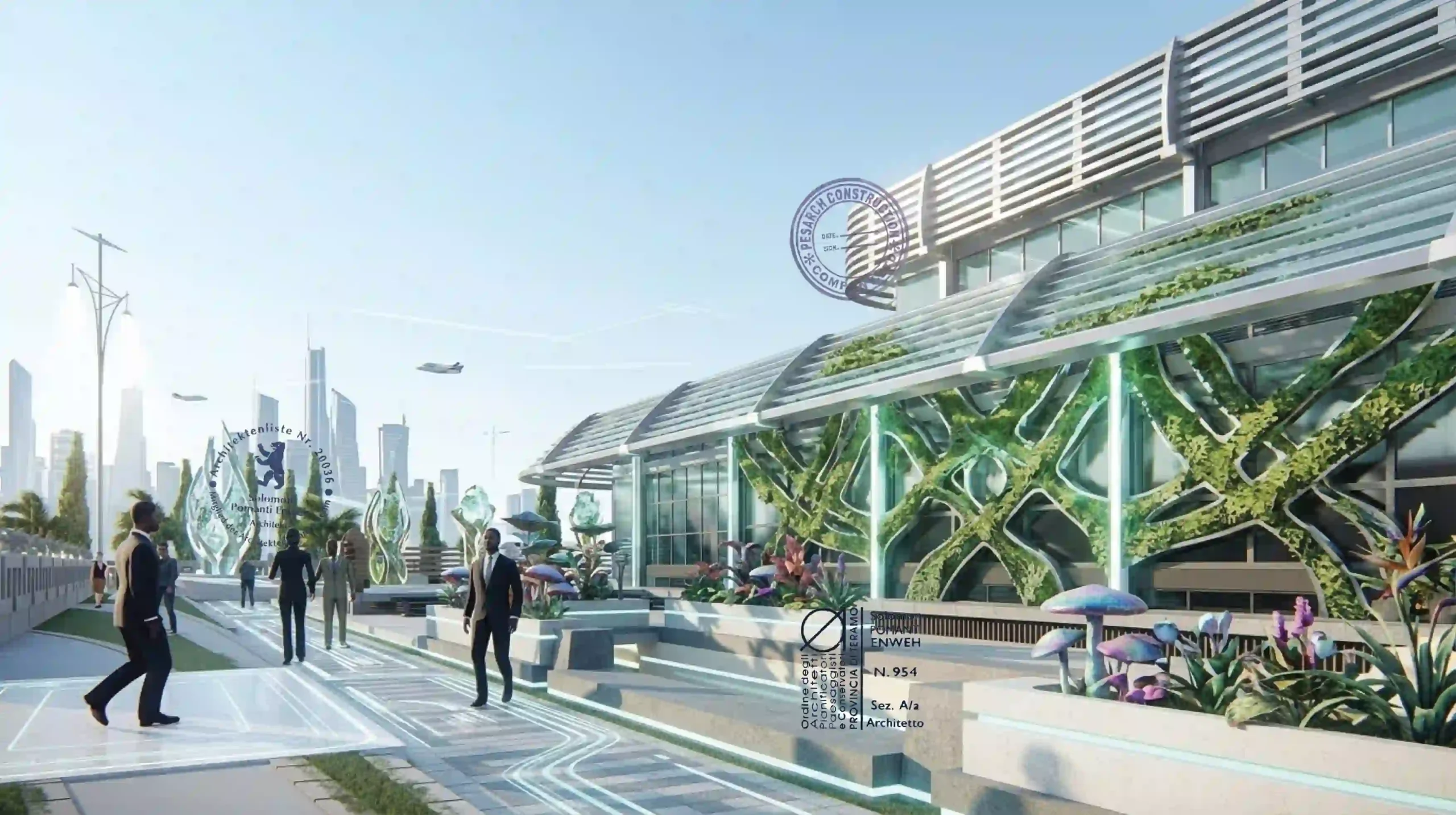
Beyond the museum walls, the surrounding grounds form a living cultural complex.
- The botanical garden showcases flora from across Africa.
- A procession of 150 sculptures honors Third World independence leaders.
- The Black House reflects the communal structures of African life before colonization.
- The Great Wall anchors the site’s outer boundary.
Adjacent to the museum is The Cage (Igbo Hall), a public space for film, food, books, and community. With a cinema, spa, rooftop bar, and lakeside promenade, it offers a modern civic gathering space grounded in heritage.
The Surrounding Complex
Beyond the museum walls, the surrounding grounds form a living cultural complex.
- The botanical garden showcases flora from across Africa.
- A procession of 150 sculptures honors Third World independence leaders.
- The Black House reflects the communal structures of African life before colonization.
- The Great Wall anchors the site’s outer boundary.
Adjacent to the museum is The Cage (Igbo Hall), a public space for film, food, books, and community. With a cinema, spa, rooftop bar, and lakeside promenade, it offers a modern civic gathering space grounded in heritage.
Join Us to Build the Future of Memory
Whether you're an academic, a citizen, or a cultural investor, there’s a role for you in shaping what this museum becomes.
For Academics
Develop research programs, fellowships, and residencies rooted in African epistemologies and cultural science.
The museum’s spatial archive offers a space for original interpretation and new knowledge.
For the Public
Walk the labyrinth beneath 54 flags, and stand in the Corona’s ring. This monument was made with you in mind.
Subscribe to Black House, a living chronicle that follows the museum’s creation, community events, and cultural milestones.
For Investors
With over 500,000 projected annual visitors, a UNESCO-aimed design, and long-term cultural value, this is a landmark to shape a generation.
Sponsor a gallery, support naming rights, or fund the botanical walk.