

United Berlin (The Cable Pyramid)
The Arch’Triangle’s German Leg
From the City That Once Divided the World, Emerges an Architectural Call for Unity
United Berlin began as a question.
Could the very city that once hosted the 1884 Berlin Conference, where Africa was carved without consent, become a symbol of global reconciliation? Could a place once split by concrete walls now anchor a space built for cultural connection, economic inclusion, and architectural healing?
This is the vision behind United Berlin, a proposed architectural project designed by a collective of young foreign professionals living in Berlin. As architects and researchers, they studied Berlin’s layers, its serenity and sharp edges, the way light shifts between old bunkers and new galleries, its coexistence of grief and growth. They saw a city that doesn’t hide its past, but constantly rebuilds its meaning.
Their findings shaped a proposal, a bold new landmark called United Berlin or The Cable Pyramid, designed as an active space for integration, creativity, and global peacebuilding.
From the City That Once Divided the World, Emerges an Architectural Call for Unity
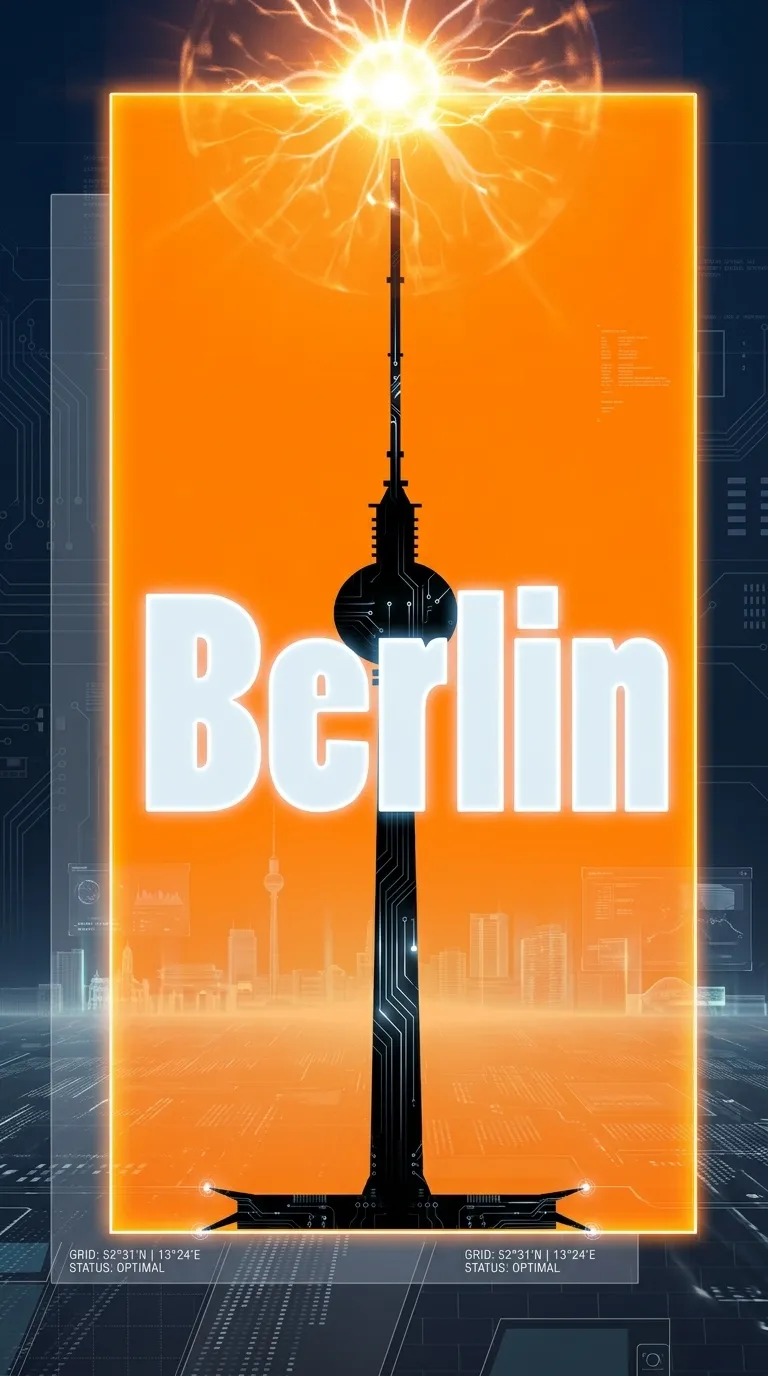
United Berlin began as a question.
Could the very city that once hosted the 1884 Berlin Conference, where Africa was carved without consent, become a symbol of global reconciliation? Could a place once split by concrete walls now anchor a space built for cultural connection, economic inclusion, and architectural healing?
This is the vision behind United Berlin, a proposed architectural project designed by a collective of young foreign professionals living in Berlin. As architects and researchers, they studied Berlin’s layers, its serenity and sharp edges, the way light shifts between old bunkers and new galleries, its coexistence of grief and growth. They saw a city that doesn’t hide its past, but constantly rebuilds its meaning.
Their findings shaped a proposal, a bold new landmark called United Berlin or The Cable Pyramid, designed as an active space for integration, creativity, and global peacebuilding.
What United Berlin Stands For
Berlin has shown the world how a city can confront its past and build something stronger. United Berlin continues that work by transforming sites of trauma into platforms for reconciliation, healing, and progress.
Historical Reconciliation
United Berlin acknowledges Berlin’s role in both division and reunification, from the 1884 Conference that partitioned Africa to the Cold War Wall. Its design brings together conflicting symbols to show how unity can rise from history’s hardest chapters.
Multipolar Collaboration
Built as a Cultural Market Center, the project invites exchange across cultures, disciplines, and ideologies, reflecting Berlin’s identity as a city where 35% of residents are foreign-born and diversity drives innovation.
Global Restorative Justice
Dedicated spaces within the site recognize the colonial violence shaped in Berlin, placing it alongside Holocaust remembrance. This dual lens makes United Berlin a living monument of shared accountability and healing.
The Cable Pyramid - Four Symbols, One Unified Vision
The proposed structure of United Berlin is built on four powerful symbols drawn from human history:

The Pyramid, representing ancient achievement and continuity

The Armoured Car, recalling the realities of conflict from past wars to ongoing unrest

The Berlin Watchtower, a reminder of surveillance, control, and the lived experience of division

Iron Cables, engineered to bind the entire form together, representing both tension and connection
Each of these elements carries weight, and their combination is deliberate. The architecture proposes an extreme geometric unification, fusing these symbols into one structure. Together, they form a Cultural Market Center, a place where conflict and cooperation, history and possibility are held in one frame.
Rather than isolating these references, the pyramid’s form brings them into relation, visually, structurally, and symbolically. Every cable that holds the structure together is part of the story, and every block carries intent.
The Unity Blocks
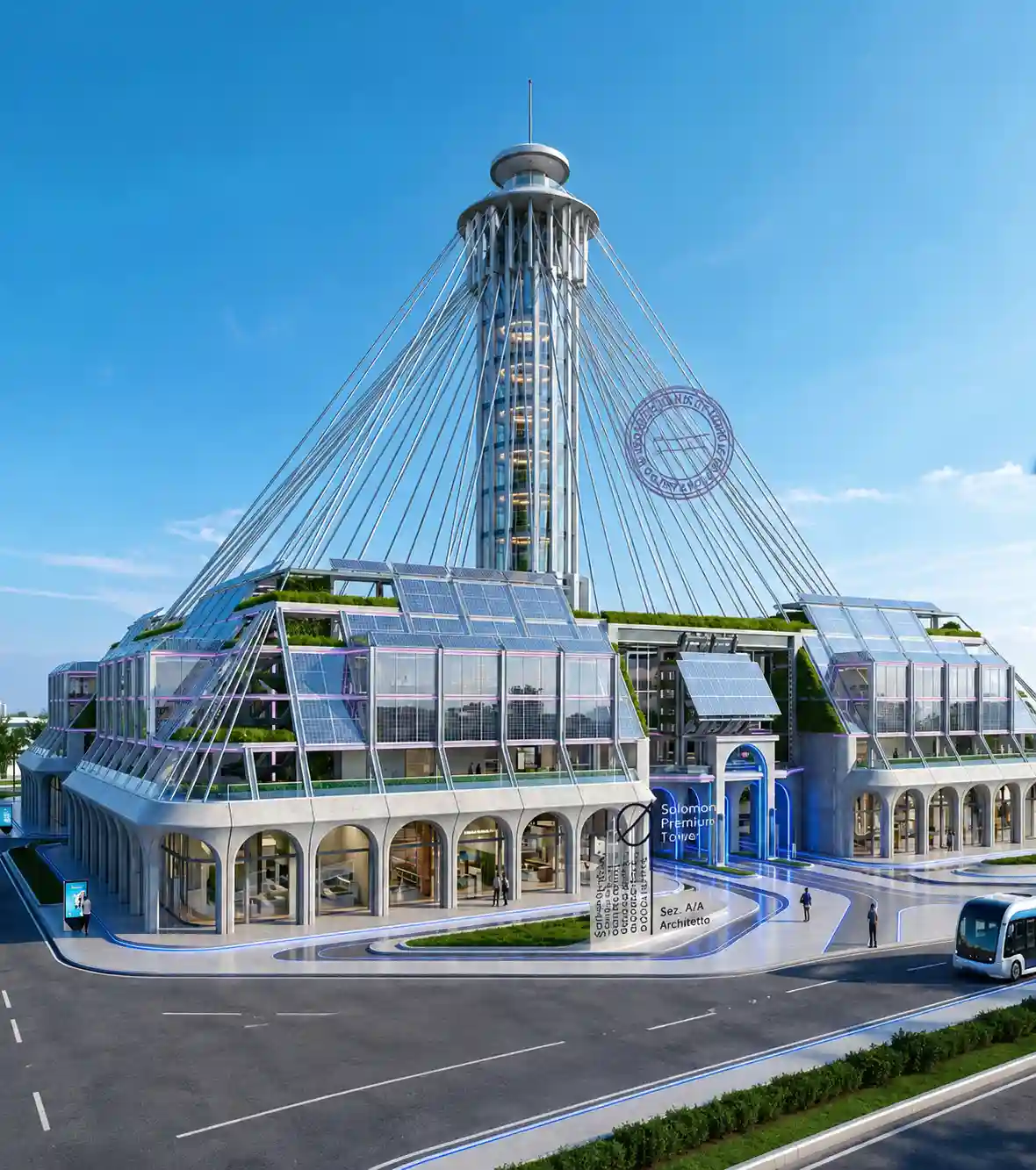
Rising from the four corners of the site are eight symmetrical structures, known as the Unity Blocks. These are not secondary buildings, but essential components of the larger pyramid.
Each one is built with:
- 20 rentable store spaces intended for small businesses and cultural vendors
- Emergency stairwells and accessible lifts for full inclusivity
- 16 exterior porticoes and 10 interior porticoes facing the central courtyard
- Corner-side access points, allowing passage between adjacent blocks via open staircases
All Unity Blocks are connected to underground spaces including parking, storage, and public restrooms. These lower levels are accessible via elevators and double escalators, maintaining ease of movement across the entire structure.
The Unity Blocks
Rising from the four corners of the site are eight symmetrical structures, known as the Unity Blocks. These are not secondary buildings, but essential components of the larger pyramid.
Each one is built with:
- 20 rentable store spaces intended for small businesses and cultural vendors
- Emergency stairwells and accessible lifts for full inclusivity
- 16 exterior porticoes and 10 interior porticoes facing the central courtyard
- Corner-side access points, allowing passage between adjacent blocks via open staircases
All Unity Blocks are connected to underground spaces including parking, storage, and public restrooms. These lower levels are accessible via elevators and double escalators, maintaining ease of movement across the entire structure.
Exhibition and Gathering Floors
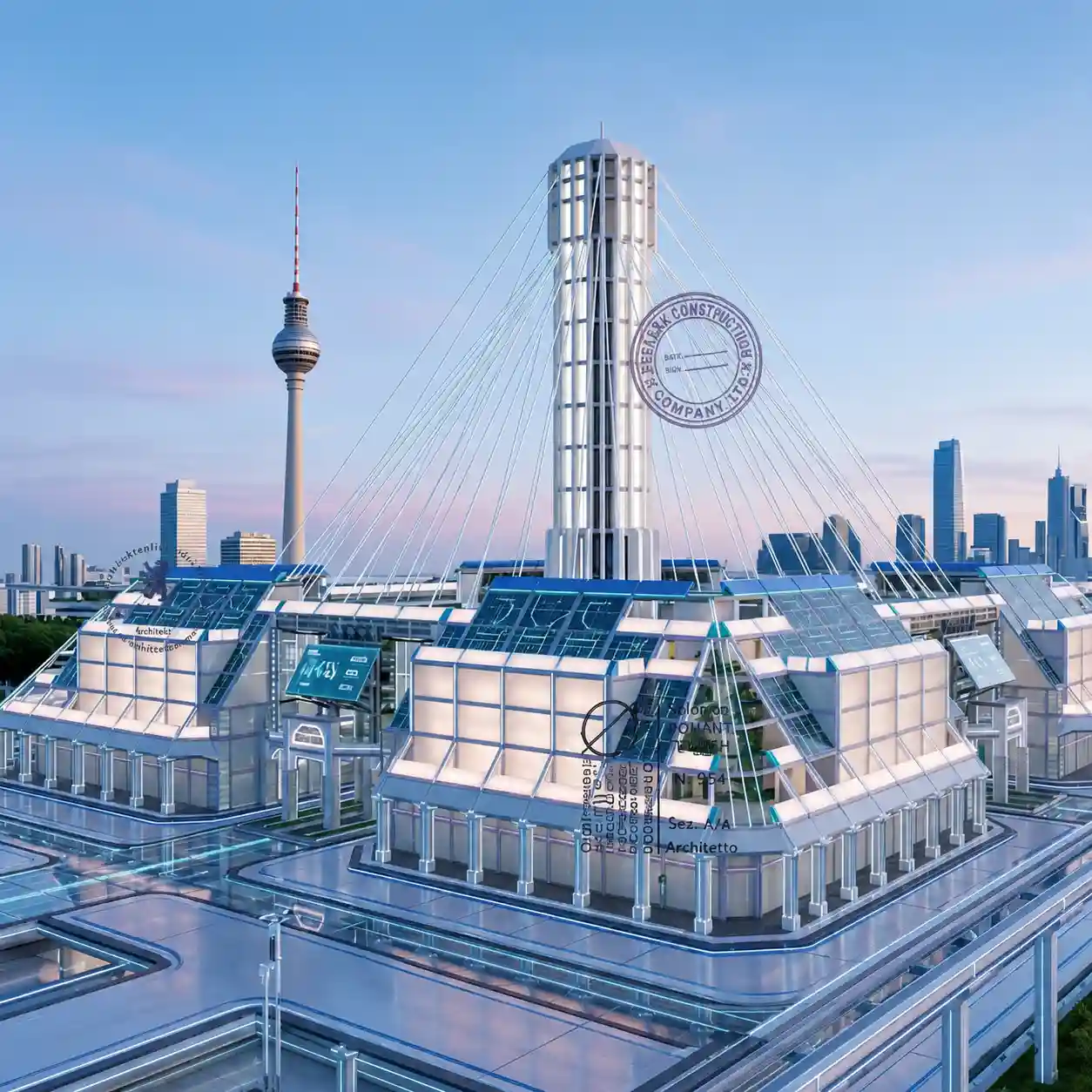
The 6th floor is designed as a dedicated exhibition gallery, a space to reflect on resilience and leadership across histories and regions. It connects directly to a multi-functional hall on the 7th floor, designed for events, dialogues, and cultural gatherings, with seamless access to the rooftop terrace above.
Entry Points and Vehicle Flow
Each of the four main facades includes a primary entrance framed by:
- Two lateral fountains, introducing movement and serenity
- Three vehicle lanes, one for courtyard access, one for underground parking and deliveries, and one for exit
- Pedestrian walkways and elevated platforms designed for landscape art and community displays
Above these entrances, steel frames with solar panels tilt at a 45° angle. These match the geometric profile of the pyramid while contributing to the site’s energy efficiency.
Exhibition and Gathering Floors
The 6th floor is designed as a dedicated exhibition gallery, a space to reflect on resilience and leadership across histories and regions. It connects directly to a multi-functional hall on the 7th floor, designed for events, dialogues, and cultural gatherings, with seamless access to the rooftop terrace above.
Entry Points and Vehicle Flow
Each of the four main facades includes a primary entrance framed by:
- Two lateral fountains, introducing movement and serenity
- Three vehicle lanes, one for courtyard access, one for underground parking and deliveries, and one for exit
- Pedestrian walkways and elevated platforms designed for landscape art and community displays
Above these entrances, steel frames with solar panels tilt at a 45° angle. These match the geometric profile of the pyramid while contributing to the site’s energy efficiency.
The Story is Built Into the Structure
At the Motherland Museum, form and meaning are inseparable. The building is designed to do what exhibitions alone cannot, carry visitors through the weight and complexity of shared human history. Rather than serving as a neutral container, the structure itself challenges, reveals, and connects by using space, symbolism, and elevation to shape how stories are seen and understood. The magnificence of this project positions it to achieve UNESCO World Heritage recognition for modern architecture upon completion.
A Structure Anchored in Balance
The tower’s circular base narrows gently to the 5th floor and then rises in equal diameter to the 12th. The top two levels flare slightly, before six iron cables descend from the upper floors to the eight Unity Blocks below, binding the entire site in visible equilibrium. The façade alternates between textured concrete and tinted dark glass, combining density with light, privacy with openness.
Entrances and Interior Layout
Visitors enter the Unity Tower through four cone-shaped doors, arranged in counter-clockwise sequence, a conscious break from linear design, meant to echo the spiral of learning, history, and human experience. Inside, the tower includes 18 internal shopfronts, 4 secondary lifts, gendered public restrooms, and a wide circular gallery space that functions as both a transition zone and a destination.
A Gallery That Confronts Power
At the center of the tower lies a provocative gallery, home to four confronting statues of leaders whose wartime decisions shaped the 20th century:
- Franklin D. Roosevelt
- Joseph Stalin
- Winston Churchill
- Adolf Hitler
Their positioning, facing away from each other across the circular space, urges visitors to reflect on history’s power struggles and their ongoing impact.
Below them, twelve stars embedded in the floor represent unity. A central elevator and spiral staircase rise from this point, as a symbolic ascent towards peace, equity, and collective responsibility.
A Gallery That Confronts Power
At the center of the tower lies a provocative gallery, home to four confronting statues of leaders whose wartime decisions shaped the 20th century:
- Franklin D. Roosevelt
- Joseph Stalin
- Winston Churchill
- Adolf Hitler
Their positioning, facing away from each other across the circular space, urges visitors to reflect on history’s power struggles and their ongoing impact.
Below them, twelve stars embedded in the floor represent unity. A central elevator and spiral staircase rise from this point, as a symbolic ascent towards peace, equity, and collective responsibility.
A Circular Core That Brings Every Path Together
Encircling the tower is the Central Compound, laid out in the shape of a semi-roundabout that connects all eight Unity Blocks. Inspired by cardinal directionality and the European Parliament’s hemicycle, it supports both foot and vehicle flow without breaking the site’s symmetry.
Designed for Inclusion and Flow
Accessibility is fully integrated. From the roundabout, a series of gentle ramps lead to two elevated rings that wrap around the base of the Unity Tower. These form a circular balcony on the semi-ground level, allowing all visitors to reach the central spaces with ease, regardless of mobility.
At each point where the ramps meet the balcony, spaces are reserved for statues representing human diversity as a visual reminder that unity is built on inclusion.
A Circular Core That Brings Every Path Together
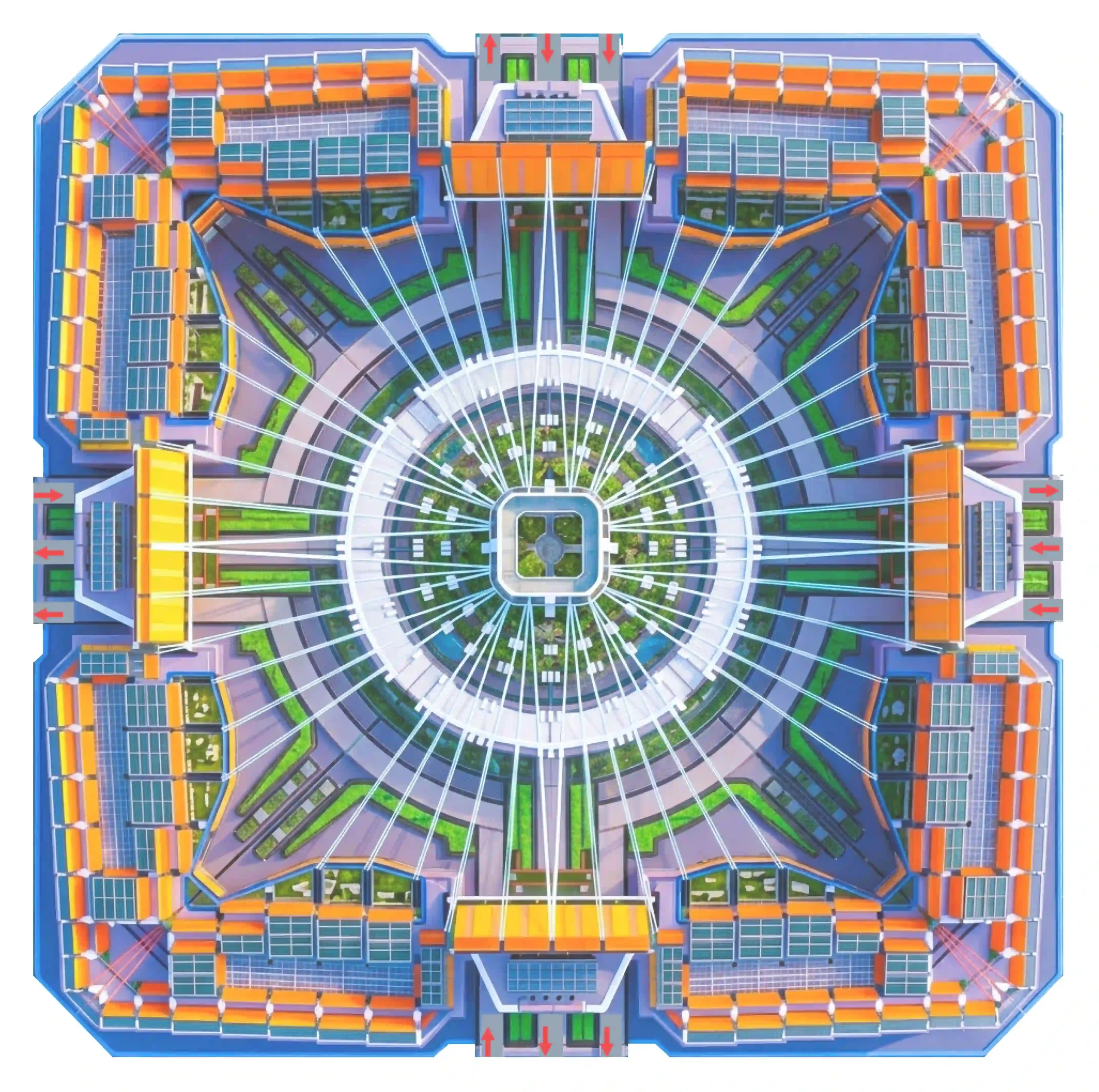
Encircling the tower is the Central Compound, laid out in the shape of a semi-roundabout that connects all eight Unity Blocks. Inspired by cardinal directionality and the European Parliament’s hemicycle, it supports both foot and vehicle flow without breaking the site’s symmetry.
Designed for Inclusion and Flow
Accessibility is fully integrated. From the roundabout, a series of gentle ramps lead to two elevated rings that wrap around the base of the Unity Tower. These form a circular balcony on the semi-ground level, allowing all visitors to reach the central spaces with ease, regardless of mobility.
At each point where the ramps meet the balcony, spaces are reserved for statues representing human diversity as a visual reminder that unity is built on inclusion.
Berlin – The Only City That Could Hold This Vision
This city has experienced rupture and rebuilding more than most. However, its ability to transform division into cohesion and grief into growth makes it the only place where United Berlin could begin. Here’s why this project matters and why Berlin is uniquely positioned to lead it
A Global Mirror for Divided Times
Berlin was once split by walls. Now, it thrives as Europe’s most cosmopolitan capital. With 35% of its population born abroad, it offers a real-time example of how fractured societies can rebuild into resilient, multicultural communities.
A Natural Home for Global Diplomacy
Berlin is already a hub for embassies, NGOs, and multilateral institutions. United Berlin builds on this foundation, offering a new civic space where peace dialogues, public gatherings, and global collaborations can take root.
A City That Puts Unity Into Practice
From 1,700+ bridges to public green spaces covering a third of its land, Berlin has turned physical connection into policy. United Berlin continues this tradition, with solar-paneled facades, butterfly gardens symbolizing the world’s oceans, and inclusive, open design at its core.
A Wake-Up Call for Fragmented Futures
The Cable Pyramid’s gallery challenges visitors to confront the consequences of global leadership, not as a way to glorify history, but to reckon with it. Its interdependent design speaks to our reality - humanity can only move forward through shared responsibility.
Join Us to Build the Future of Memory
Whether you're an academic, a citizen, or a cultural investor, there’s a role for you in shaping what this museum becomes.
For Academics
Develop research programs, fellowships, and residencies rooted in African epistemologies and cultural science.
The museum’s spatial archive offers a space for original interpretation and new knowledge.
Propose a Research Collaboration →For the Public
Walk the labyrinth beneath 54 flags, and stand in the Corona’s ring. This monument was made with you in mind.
Subscribe to Black House, a living chronicle that follows the museum’s creation, community events, and cultural milestones.
Subscribe Now →For Investors
With over 500,000 projected annual visitors, a UNESCO-aimed design, and long-term cultural value, this is a landmark to shape a generation.
Sponsor a gallery, support naming rights, or fund the botanical walk.
Become a Founding Patron →